
Professional Chimney Cleaning
Chimney sweeping in Fort Smith for wood-burning fireplaces where creosote accumulates faster than the flue was designed to handle
Over time, wood-burning systems can accumulate soot and creosote. Creosote is combustible, and excessive buildup can increase the risk of a chimney fire.
Our chimney cleaning services are intended to remove accessible deposits and help maintain proper system operation.
We also evaluate conditions that may require additional attention, including heavy glazed creosote, blockages, or visible deterioration.
Some creosote deposits may require specialized treatment and additional visits.
Remember: Chimney cleaning is maintenance, not a guarantee of safety.
What Proper Sweeping Requires
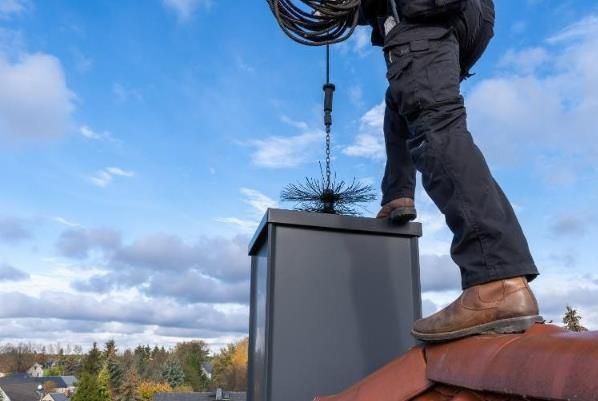
A thorough chimney sweep involves more than running a brush through the flue. The technician selects brushes and rods that match the flue's cross-section, whether rectangular, round, or oval, and works from top to bottom or bottom to top depending on access and the type of buildup present. Containment methods prevent soot from entering the living space, and the technician removes all debris rather than pushing it into the firebox or leaving it at the base of the flue.
Once the sweep is complete, you will notice that smoke rises straight up the flue without backdrafting into the room, the damper closes tightly without interference from buildup, and the firebox no longer smells of stale creosote between fires. The flue draws air efficiently, which means the fire burns hotter with less wood and produces less smoke inside the house.
Cleaning alone does not certify a chimney for safe use; if the sweep identifies a cracked liner or a deteriorated crown, those repairs must be completed before the system can operate safely. Pro Qual Services provides a written report of any findings so you can decide what to address and when.
Common Questions About This Service
Homeowners in Fort Smith often ask how the sweeping process works and what it accomplishes, especially when they are using a fireplace inherited from the home's original construction.
How often should a chimney be swept?
If you burn wood regularly throughout the heating season, the flue should be swept at least once a year, typically before the first fire of the fall, because creosote accumulates with each fire and hardens over time into a glaze that is harder to remove and more flammable.
What happens to the soot and creosote during the sweep?
The technician uses a brush sized to the flue and works it through the entire length of the passage, dislodging creosote and soot, which either fall into a containment area at the base of the flue or are captured by a vacuum system, then bagged and removed from the property.
Why does smoke sometimes spill into the room even after a sweep?
Smoke spillage can result from a damper that does not open fully, a flue that is too short relative to the roofline, or negative air pressure inside the house caused by exhaust fans or a tight building envelope, and the sweep will identify which condition is present.
What does the technician check while sweeping the flue?
During the sweep, the technician inspects the flue liner for cracks or gaps, examines the crown for water damage, and tests the damper for proper seating, reporting any issue that requires repair work beyond cleaning.
How do older Fort Smith homes affect the sweeping process?
Chimneys in mid-century brick homes were often built with unlined flues or clay tile liners that crack over decades of use, and the sweep will reveal whether the liner is intact or whether it needs repair before the chimney can be used safely.
Pro Qual Services also sweeps chimneys in Greenwood, Van Buren, Barling, Alma, and Lavaca. The business is locally owned, and the owner is a CSIA-certified chimney sweep, which means the work follows national standards for flue cleaning and inspection. Call (479) 670-0470 to arrange a sweep before the heating season begins.