
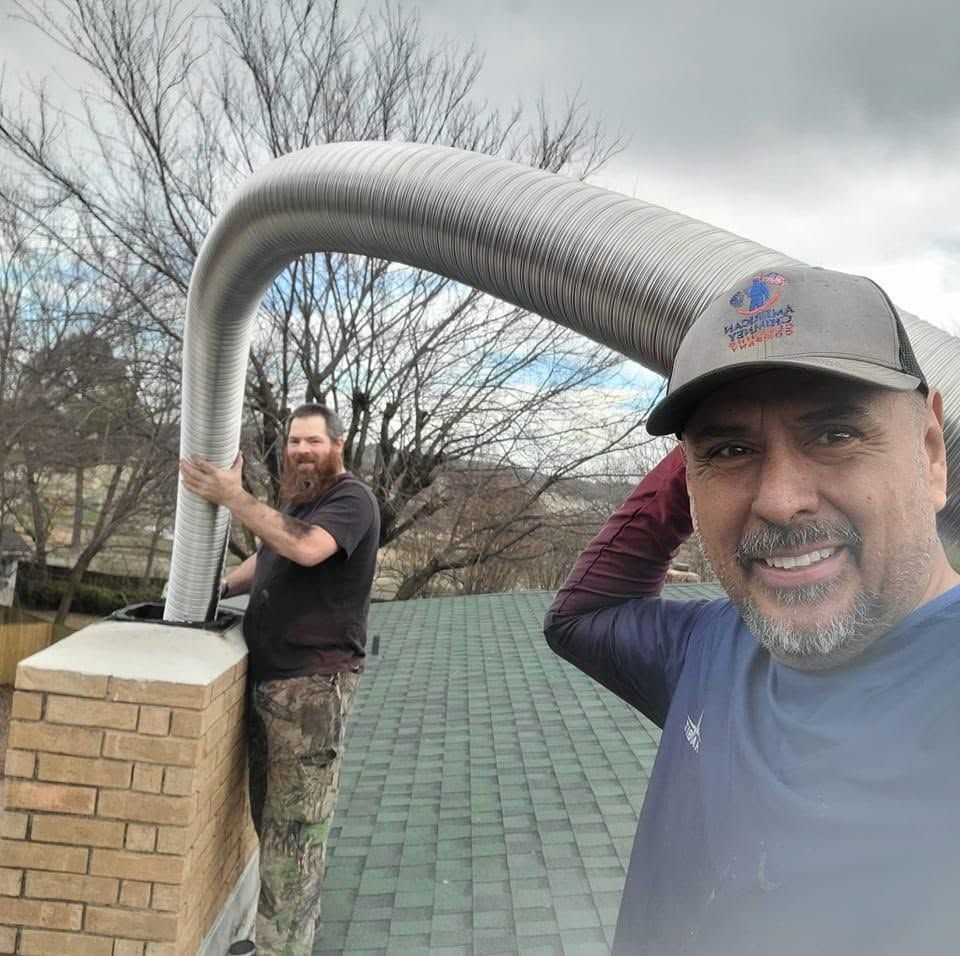
Flues That Safely Carry Smoke Out
Chimney Liner Installation & Repair in Fort Smith for cracked clay tiles and undersized flues connected to modern appliances
A damaged or undersized liner is a safety problem, not a cosmetic one—it allows heat, smoke, and combustion gases to contact masonry or framing that was never meant to be exposed to those temperatures. Many homes in Fort Smith, particularly those in Midland Boulevard and Old Town, were built with masonry chimneys and clay flue tiles that crack, separate, or deteriorate after decades of exposure to heat cycles and moisture. Pro Qual Services installs and repairs chimney liners across Fort Smith and Van Buren, starting with a camera inspection that shows the actual condition of the tiles or existing liner before any work is quoted.
The job begins with a Level 2 inspection that includes a camera scan of the full flue length, so the crew can identify cracks, offsets, missing mortar, or sections where the tile has collapsed. The liner type—stainless steel or cast-in-place—is chosen to match the appliance being vented, whether that is a gas insert, a woodstove, or a traditional fireplace, and the installation includes any cap, chase cover, or crown work required to seal the top and protect the new liner from weather.
Request a Level 2 inspection with camera documentation to see the flue condition and liner options for your specific appliance.
How Liner Installation Addresses Flue Damage
The liner creates a continuous, sealed path from the appliance to the cap, so smoke and gases move through the liner rather than seeping into gaps in cracked clay tiles or deteriorated mortar joints. Stainless steel liners are sized to the appliance output and inserted from the top of the chimney, while cast-in-place liners are poured to fill the entire flue cavity and insulate the structure from the inside.
After the liner is installed, the flue drafts correctly, the appliance vents without backdraft or odor, and there is no heat transfer to the surrounding masonry or framing. The camera inspection before and after shows exactly what changed inside the flue.
The work follows ICC, IRC, CSIA, and NFI standards, and the quote should specify whether it includes the cap, chase cover, and any crown or flashing repair needed at the top of the chimney. Pro Qual Services works with insurance on chimney fire claims and offers financing on liner installations.
Answers About How the Work Is Done
Homeowners in Fort Smith often ask about the process and what the inspection reveals before committing to a liner.
What does the Level 2 inspection show?
The camera scan reveals cracks, offsets, missing tiles, creosote buildup, and any section where the flue is damaged or undersized for the appliance, and that documentation is used to determine the liner type and installation approach.
How is a stainless steel liner installed?
The liner is measured to the flue height, inserted from the chimney top, and connected to the appliance at the bottom, with insulation wrapped around the liner if the flue is on an exterior wall or in an unheated chase.
When is a cast-in-place liner recommended instead of stainless steel?
Cast-in-place liners are used when the flue is severely damaged, offset, or irregular in shape, because the poured material fills the entire cavity and strengthens the chimney structure while creating a smooth interior surface.
What happens to the old clay tiles during liner installation?
The tiles are left in place if they are intact, but cracked or loose sections are removed before the liner is inserted to prevent obstructions and ensure the liner seats properly from top to bottom.
What will change after the liner is installed?
The appliance drafts cleanly, there is no smoke smell in the home, and the flue passes inspection for safe connection to gas, wood, or pellet appliances.
Pro Qual Services also installs and repairs chimney liners in Greenwood, Van Buren, Barling, Alma, and Lavaca. The owner is CSIA-certified, and all work follows current safety standards. Call (479) 670-0470 to schedule a flue inspection and liner consultation in Fort Smith.